Angel Maker: Part One by B. B. Wright

Palladium Cinema

Angel Maker

A Short Story of Fiction by B. B. Wright

An Inspector Alexander Collier Mystery

Inspector Alexander Collier Mysteries will often provide a choice for the reader. If you want to obtain a deeper understanding or a ‘feel’ for the period follow the embedded links (high-lighted blue and underlined) found in the text of the story.

Part One

All the King’s Horses and All the King’s Men

A heavy grey mist had settled over Bournemouth and since it was well past the ten o’clock closing for pubs and the last of the trolley buses had been docked for the night, very few people wandered about on its damp, cold streets. The doors to the 550 seat Palladium Cinema had been locked for at least an hour and the marquee which had highlighted that evening’s show of The Divorce of Lady X starring Merle Oberon and Laurence Olivier had been plunged into darkness.

Fish and chips news wrappers and other detritus carelessly tossed aside from earlier that day blew about like tumbleweed. For an ephemeral moment the front page of the Guardian was pasted against a wall by the wind to expose once again what should have been a troublesome headline:

Germany’s Day of Wrecking and Looting
Gangs Unhampered by the Police
Synagogues Burned Down in Many Cities

A young man with a potato sack across his shoulders hurried along Fisherman’s Walk. Lamplight splashed his shadow across the Guardian headline like a stain as he turned into the alley beside the Cinema. He felt the limp, small body he carried in his sack stirring as the chloroform he had given her was beginning to wear off. Quickening his pace, he continued down the alley to the back of the building.

He laid the sack down in a sheltered area in the glow of the light from the lamp above the back door to the Cinema. Untying the sack he took out his knife and slit the sack open from top to bottom. Folding the blade in, he returned it to his pocket.

He liked his prey young, very young and their innocence made what he was about to do to her that much more pleasurable. She was more than just a receptacle to feed his needs; she was an unblemished treat of virgin purity. He sat down beside her and waited for her to wake; he stroked her hair and ran his hand along her white legs and up under her gown. He needed her conscious. He enjoyed their struggle and pain; it made him even more excited.

He had strangled his last victim but, tonight, he had planned a different thrill for himself.

Astride her and fully satisfied, he released his grip on her and stood up and fastened his pants. He watched her as she curled up into a fetal position, whimpering. And he smiled.

“Do you believe in angels?” he asked her softly.

Her nod was hesitant.

The sight of blood on her gown between her legs etched terror on her face as she looked up at him.

“Yes, I thought so,” he continued. “Now there, there, Rebecca. There’s nothing to be afraid of.” He reached out to touch her but she pulled away. “I am an angel maker. That’s right. And, tonight is your lucky night.

He came closer and went down on one knee next to her.

“Have you ever played broken propeller before?” he whispered into her ear.

She shook her head and pulled herself in even closer.

“No, of course you wouldn’t’ve. I just invented it. Tonight you will be first to play it with me. But I must secure you to ensure the game is played correctly.”

He forced her to straighten out and took a rope from his pocket and wound it around her several times so as to fix her arms tightly to her sides. Then after several failed attempts, he finally stuffed her underpants into her mouth.

“That last bite hurt, Rebecca.” And, he slapped her hard across the face making her unconscious. “No!…No!…That won’t do! Damn! You must be awake to play this game!”

Several minutes passed before she regained consciousness.

“Good! Now we can play my game. But, first I must remove your ribbon so that your hair hangs loose.”

Removing it, he placed it in his pocket.

He grasped her slender ankles and began to swing her around and around, the speed increasing with each turn.

“Humpty Dumpty splat on a wall, Humpty Dumpty had a great bawl. Broken propeller,” he yelled out and let go his grasp.

The lamplight over the door highlighted it all until the moment her small foot sliced through it sending everything into darkness as her head cracked against the brick wall.

He stepped closer to observe her lifeless body.

“All the King’s horses and all the King’s men, definitely can’t put poor little Rebecca together again. Now you are an angel.”

Pulling out his knife, he cut off a thick strand of her hair and placed it in a locket and returned both to his pocket.

His trophies of her hair and ribbon in hand, he returned to the loneliness of his flat to wait. He had no idea when the urge would erupt again or who would be his next prey. Yet, somehow in his socially inept mind, living on the edge of society, he understood it would not be long because he had already recognized that the time between killings was becoming shorter.

Murder with a Twist by B. B. Wright; Fateful Choices: The Finale

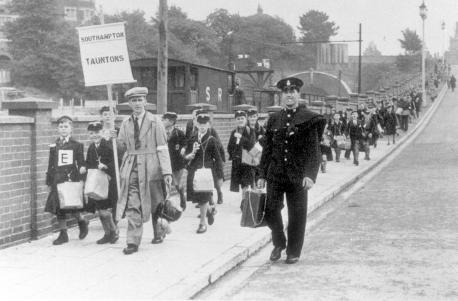
evacuees to bournemouth

Fateful Choices: The Finale

Inspector Alexander Collier Mysteries will often provide a choice for the reader. If you want to obtain a deeper understanding or a ‘feel’ for the period follow the embedded links (high-lighted blue and underlined) found in the text of the story.

Duped
A Short Story of Fiction by B. B. Wright

The weeks passed quickly and by Saturday, August 19, 1939, news about the murder of Arthur Brodley and related stories with respect to the capture and incarceration of his murderer, Joseph ‘Philly’ Morris, had slipped into the middle pages of the Echo. Throughout most of the month, the Monte Carlo Ice show, Akhbar’s Indian show, complete with a levitating woman, Max Miller, who was considered to be the rudest comedian that ever lived, and the crowning of Miss Betty Meadus as Queen of High-Cliffe, graced the front pages of the Echo. Toward the end of August the front page of the Echo shifted dramatically with the signing of the ten-year non-aggression pact between Germany and the Soviet Union on August 23. On Tuesday, August 29, the Echo announced: “Children Evacuation to Bournemouth Begins Tomorrow.” Herbert Morrison, leader of the London Country Council, was quoted to have issued this advice: “Children—be kind to each other. Parents: Make the kiddies cheerful. Others: Show a British smile.”  As August drew to an end,  the pages of the Echo were filled with the growing crisis; still, it made room on the front page to report on a jewel heist from Knibbs & Son in Boscombe. No mention was made on any of its pages about the Brodley murder or the compelling circumstantial evidence against ‘Philly’ Morris as argued by his lawyer, Richard Bell, or that the trial would begin on Tuesday, April 30 at the Central Criminal Court in London, commonly known as the Old Bailey.

On Friday, September 1, Hitler invaded Poland. Two days later, on Sunday, September 3, Prime Minister Neville Chamberlain announced in deeply sad undertones that war had been declared against Germany.

Everyone in Britain awaited a calamity after the German invasion of Poland but none materialized; they had expected a robust response to the German invasion of Poland but little of military importance took place. Only stilted sameness existed between people as they went about their daily business trying to absorb and adjust to the torrent of prohibitions of what they could not do and what they had to do. Their transition to this new normalcy ached for relief from the portentous suspension they found themselves in and they willed their attitudes to shift away from Hitler’s machinations to the greater pleasantries and possibilities inherent in holiday planning that smacked with the wholesome and real camaraderie of family and friends. The children who had been evacuated to the Bournemouth area for their protection began to return to their families as reality’s tenuous hold on the preciousness of time regrouped to momentarily follow a different drummer. This period between September 1939 and April 1940 became known as the “Phoney War” or “Sitzkrieg.”

Legal sparring between the Crown and ‘Philly’ Morris’s lawyer, Richard Bell, had pushed the trial to Tuesday, June 25. During that summer of 1940 the fate of Britain hung in the balance as the battle for Britain was fought out overhead between the British Air Force and the German Luftwaffe.

Satiated and exhausted with the daily news of death, the usual curiosity seekers that filled a courtroom during a murder trial had lost their taste for its details and, apart from those actually involved in the trial, the courtroom in Old Bailey was empty.

Norman Steffens had a square face with a jaw line that could chisel granite. Noted for being incredibly outspoken and self-assured, the 34-year old newspaper reporter had developed a reputation for not only his disconcerting ability to analyze events and detect underlying patterns but his uncanny ability for crystal clear language in his articles. As a result, he had developed a sizeable readership. Fixated on this trial, he had turned his finely oiled skills to champion ‘Philly’ Morris’s innocence. His first ‘shot across the bow’ of the Prosecution’s case was a carefully crafted and well received article that challenged the credibility of the saliva test to identify blood type.

On the morning of September 7, Chief Inspector Collier entered the courtroom and nodded in Steffens’s direction when their eyes met as he sat down on the bench at the opposite end to him. Time marched by slowly as Collier reviewed the critical parts of the trial in his mind while he awaited the jury’s verdict. Indelibly seared into his mind were the words of Morris’s lawyer when he had held aloft one of the cigarettes butts and asked the jury “…how is it possible that invisible traces of saliva could even remotely determine the blood type of an individual? In all conscience, could you send a man to the gallows on such skimpy evidence?” Bell’s all-out assault on the credibility of the saliva test had been immediate as seen on the faces of the jurists. It had become quite obvious to Collier that the well-presented case by the prosecution had just been usurped and that it had been reduced to a single scrap of disputed evidence.

When the jury entered, Collier glanced in Steffens’s direction and found him looking at him with a smirk on his face. It didn’t take long before Collier felt the red-hot heat of anger and disappointment begin to leave its imprint as it crawled up the back of his neck.

In a smog-filled room of cigarette smoke at the Strand Palace Hotel positioned close to Trafalgar Square, River Thames and Covent Garden on the north side of The Strand in London, ‘Philly’ Morris celebrated his newly won freedom with the newspaper reporter Norman Steffens by opening a second bottle of champagne. Well on their way from being just inebriated to blindly drug, Steffens watched as Morris lollopped about the room slurping his drink and singing Andy The Handy Man.”

“T’is George Formby’s best song, don’t you think? “ He poured another glass and offered more to Steffens.

“Damn it, ‘Philly,’ it’s barely pass noon and I can barely feel the end of my nose,” Steffens chortled, waving ‘Philly’ off.

“Noon…schmoon…who cares.” Bottle in one hand and the glass in the other, Morris flopped down on the couch opposite Steffens, spilling the contents of his glass on himself. “Fock! “ He exclaimed. “What an arsehole, I am!” Placing both bottle and glass on the table in front of him, he wiped himself down with the cushion beside him. More or less satisfied with the result, he poured himself another glass of champagne. “This, my good friend, is for you and me lawyer,” and he began to sing his rendition of the George Formby song:

“Now he’s a jack-of-all-trades as busy as a bee
Should anything need fixing, just get in touch with Steffens
If you’re water cisterns frozen, or the baby’s face turns blue
Ring Lawyer Bell on the telephone, cos he knows what to do
They call me ‘Philly’, Winner ‘Philly’, a lucky man indeed.”

Morris’s face turned red as he choked on his own laughter.

When Morris had stopped laughing, Steffens shifted forward on his chair and leaned across the table separating them. “Tell me something, ‘Philly,’ and this has been something I have never been able to figure out, how do you think the murderer gained access to Brodley’s safe and where does the hair curler figure in?”

Morris suddenly took on a sober demeanor. He finished the small amount of champagne in his glass and returned it to the table between them. Sitting back in the couch, he spread his arms along its back. “My guess… and …I’m only guessing ‘Steffie’ old boy…but I’d put my money on his granddaughter.”

“Hmm…that’s interesting, why her?”

“She gained a lot from the old man’s death.”

“You mean his estate?”

“And its contents. Worth a fortune.” He poured himself another glass of champagne and swirled the contents around.  “I think old chum that the murderer and her were in cahoots….Like you and me…a real win-win situation. Salut!” And, he drank the contents of his glass in one gulp.” As for that hair curler…” He shrugged.

“I think I’d better head off while I can walk,” Steffens said, standing up.

Unable to stand up after several attempts, Morris glared at him. “But, its way too early to go! Stay and celebrate!”

Fending off Morris’s entreaties to remain, Steffens weaved across the room to the door and left.

Several hours later, Steffens was awakened from a deep sleep by someone banging on his door. Disoriented, he stumbled out of bed and after stubbing his toe and tipping over a chair as he made his way across the room, he finally opened the door.

“Jesu… ‘Philly’…” The vomit and alcohol stench was too much for Steffens and he backed away in disgust.

Morris stepped into the room and shut the door behind him. Sobbing and using the wall as a brace to hold himself up, he blurted out: “I can’t live with it anymore…I’ve got to tell somebody. The jury was wrong…I killed the old bastard.”

Appalled, Steffens began to pace the floor. He and the jury had been duped and there was nothing he could do. British libel laws were stringent. He was the only one present to hear his confession and once tried and found innocent, Morris could never be tried again for the same offence. If he reported what he had just heard he knew Morris would deny it making him libel for massive financial damages. And, he had no intention of giving Morris that satisfaction.

The mournful, wailing sounds of air raid sirens echoed across the City as Steffens descended the stairs to the bomb shelter. He felt no qualms or remorse about leaving Morris’s drunken and unconscious body in his room, only despair at being so thoroughly duped. He hoped that if luck worked in his favor, Morris would be found dead amongst the rubble and he could reveal his confession.

Brodley’s granddaughter, Valerie, was in London that evening too, staying in a hotel a discrete distance away from the Strand Palace Hotel. Unfortunately, her hotel took a direct hit and she died before she could leave her room for the bomb shelter.

The outcome of the trial bothered Chief Inspector Collier  until the truth was finally revealed a full decade later. As ‘Queenie’ Stoddard predicted, his career blossomed but, not without much heartache. Confounded by ‘Queenie’s’ uncanny ability to forecast future events, his curiosity and analytical mind finally got the better of him and he visited the Stoddard household.

Fateful Choices: Part Four of a murder with a twist by B. B. Wright

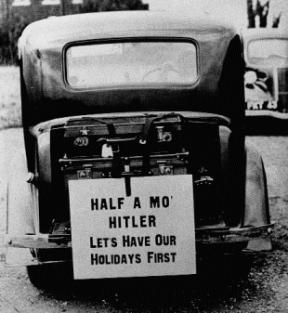
Half a Mo' Hitler

Fateful Choices: Part Four of Five
Under Lock and Key

Inspector Alexander Collier Mysteries will often provide a choice for the reader. If you want to obtain a deeper understanding or a ‘feel’ for the period follow the embedded links (high-lighted blue and underlined) found in the text of the story.

A Short Story of Fiction by B. B. Wright


Entering the summer of 1939, the people of Bournemouth endured a time of suspension greater than the contemplation of the worst as Nazi Germany’s army went on menacing maneuvers. Bournemouth was too busy having a good time to worry about Hitler and said so on signs strapped to the boots of vehicles: Half A Mo’ Hitler Let’s Have Our Holidays First.

Two weeks had passed since Arthur Brodley’s murder on May 21as Chief Inspector Collier poured his tea and sat behind his desk to review his notes on the case.

The autopsy report: assailant had attempted to strangle Brodley first before bludgeoning him with a torrent of hammer blows to the head.

The lab results on the cigarette butts: outstanding.

Brodley’s granddaughter, Valerie: grandfather’s safe contained a large stash of money and a copy of his will. Grandfather had a fondness for entertaining prostitutes; hair curler may have been used during such an occasion.

He lingered here for a moment before writing: Will??? Who benefits??? Then he continued reviewing his notes.

Interviews with local prostitutes, including Brodley’s regulars: dismissed idea of hair curler as part of their routine.

He placed a large question mark beside hair curler.

‘Philly’ Morris, one of their regulars, had suddenly come into money. And, lots of it.

He circled Morris’s name several times.

Mrs Stoddard (aka ‘Queenie’) provided no additional information on day of the murder. Suggested I might learn more by attending one of her séances.

In the margin, he scribbled:??? Possibility??? Then, he crossed it out.

Placing the opened side of his notebook face down on his desk and sitting back in his chair, Collier began to mull over the events since the murder when the buzzer on his intercom intruded.

“Yes, Sergeant?!”

“…Jock Mahoney…owner of Hollies Pub…and Quentin Hogg…mortgages at the bank are here, sir.”

“About?” There was a momentary silence. “Did they say what it was about, Sergeant?”

“The Arthur Brodley murder, sir.”

“Hmm…Send the gentlemen along. And, you come along too, Sergeant.”

Mahoney and Hogg reiterated what had already been learned from the local prostitutes, namely that Joseph ‘Philly’ Morris, a person normally strapped for money, had suddenly come into a lot of it and had been spending it freely. According to Quentin Hogg, two days after the murder Morris had waltzed into the bank and had paid off the considerable arrears on his mortgage. Mahoney referred to Morris as a loser and chronic liar and that neither he nor his pub regulars who played the horses believed that ‘Philly’s’ recent affluence had come about from a win on the horses.

Twenty minutes later Sergeant Snowden and Chief Inspector Collier were on their way to the residence of Joseph Phillip Morris.

While the Sergeant remained with the vehicle, Collier went to the front door and knocked. Unkempt, toothless and in a vile mood, Joseph Morris opened the door but refused entry to the Chief Inspector. During questioning, it wasn’t long before Morris launched into a  diatribe against Brodley because he had turned him down for a small loan. As his bilious onslaught continued there were several references to Brodley’s safe. When Collier asked Morris if he minded providing samples of his fingerprints, Morris ordered him off his property and slammed the door in his face.

Collier crossed his arms on the roof of the Wolseley and looked across at Snowden. “Well Sergeant…I’m sure he’s our man…Now to prove it.”

Upon his return to the station, Collier was greeted with good news. The lab results on the cigarette butts had arrived from the London Home Office and their smoker had been a secretor. The analyst, Sidney Greenstreet, had identified the smoker’s blood group as AB, the rarest type, found in less than 3% of the population.

Collier placed the report on his desk and sat back in his chair and let out a long sigh while Snowden looked on.

“Is it what you were hoping for, sir?”

“It’s even better than expected, Sergeant.”

“But…then…why that troubled look?”

“Because, Sergeant, I need a specimen from Joseph Morris and, given his attitude, it may be next to impossible to get.” Picking up the lab report, he began to flip through it in a cursory manner then stopped. “…Unless…Hmm…that just may work. Sergeant, ask Constable Dubin to come in.”

During his interview of Jock Mahoney, Collier had not only learned that Joseph Morris was a regular at Hollies Pub and an alcoholic but that he was also a chain-smoker. So, when Constable Dubin entered his office he wasted no time laying out his plan to ensnare Morris. He instructed the constable to drop into the pub—out of uniform—shortly after eight that evening and befriend Morris by plying him with drinks, cigarettes and talk of horse racing. He reassured Dubin that there was enough money in petty cash to cover his expenses. When the pub closed at ten and the patrons had gone, the constable was then to gather up the cigarette butts in the ashtray left by Morris, place them in a bag and return to the station where he would be waiting to drive the package directly to the London Home Office that evening.

Once the Sergeant and the Constable had left his office, Collier began to initiate the next step in his plan. Picking up the phone receiver, he dialed the number of his long time friend, Sidney Greenstreet, to convince him to remain well after hours at the Home Office to analyze the contents of the package.

The next day Collier returned with the answer he hoped for: Morris was indeed a secretor with blood group AB.

Now, it was time to turn the screws on Morris.

Sergeant Snowden and Chief Inspector Collier returned to Morris’s residence mid afternoon that same day to confront him. Morris angrily insisted that he had nothing to hide and opened his house to a search. During their search they found a set of curlers similar to the one found at the crime scene and a bundle of brown paper bags, the kind that had been wrapped around the murder weapon. When Morris was asked about the items he shrugged and told them that he kept the curlers for his lady friends who stayed over from time to time and that the bags were leftovers from when he had been a grocer. When Morris boldly proffered his hands for finger-printing to demonstrate confidence in his innocence, Collier gladly accommodated him.

When Collier entered the station later with samples of Morris’s fingerprints, sitting on the bench opposite the duty desk was ‘Queenie.’

“Inspector…” she called out.

Collier hadn’t seen her when he entered but he immediately recognized her modulated and fruity voice. He turned and smiled: “Mrs Stoddard, please, just one moment and I’ll be with you.” He turned to Sergeant Snowden and instructed him to bring the fingerprints to Leonard Scoffield for comparison in the Brodley Case. Once Snowden went through the set of doors leading to Scoffield’s office, he turned his full attention to Mrs Stoddard. “Now, Mrs Stoddard, what can I do for you?”

“Nothing…Inspector…It’s what I can do for you…I see you’ve found your murderer. The thumb print will clinch ‘Philly’ Morris’s arrest.”

Collier’s forehead furrowed.

“How…?”

She held up her hand to stop him from going further as she stood up. “It doesn’t matter, you wouldn’t believe anyway. Just remember, you don’t always get what you want, Inspector. Life is full of surprises with all its twists and turns. Your life will be full and successful but not before much sadness. You know where I live, Inspector, if you care to learn more.”

Dumbfounded by what had just transpired, Collier was watching her leave the station when Leonard Scoffield came excitedly through the set of doors that led down the hallway to his office.

“We’ve got him, Alex! The right thumbprint matches the print on the beer glass.”

And, they embraced each other in jubilation.

Forty minutes later, Collier had the pleasure of locking the vitriolic ‘Philly’ Morris behind bars.


Dear Readers:

I hope you are enjoying Fateful Choices? So, do you think you know how it will end? I am willing to bet that the finale in September will surprise you. Until then, thank you for following me and I look forward to our time together again soon.

B. B. Wright


Fateful Choices: Part Three of a murder with a twist by B. B. Wright

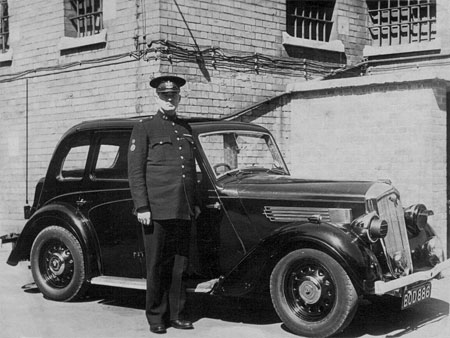
policebaker

Fateful Choices: Part Three
21 Darlington Road

Inspector Alexander Collier Mysteries will often provide a choice for the reader. If you want to obtain a deeper understanding or a ‘feel’ for the period follow the embedded links (high-lighted blue and underlined) found in the text of the story.

A Short Story of Fiction by B. B. Wright


The call came through to his home at 4:00 A. M. Putting on his slippers he grabbed his robe from the foot of the bed and while struggling to put it on in the darkness he encouraged his wife, Lila, to go back to sleep. By the time he reached the bottom of the stairs the phone was into its fifth ring. Turning on a small table lamp on the telephone table in the alcove under the steps he cleared his throat and picked up the receiver: “Chief Inspector Collier…”

The call was concise and disturbing to say the least. Arthur Brodley had been rushed to the hospital shortly after midnight as a result of a severe beating and had died within the past half hour. Sergeant Billie Snowden was quick to advise him that the crime scene had already been secured.

“Who called it in Sergeant?”

“His granddaughter, Valerie…She found him in the lounge.”

“Did you get her statement?”

“Constable Dubin did, sir.”

“Did she say if anything was missing?”

“In her statement she said that his rings, watch and gold chain were missing.”

“Did anyone check his pockets after his arrival at hospital, Sergeant?”

“I did, sir. They were empty.”

“Good work, Sergeant!”

“Should I await the preliminary autopsy report?”

“Let’s not worry about that for the moment. Give me time to shave and have a bite to eat…Say an hour? …Yes…pick me up in an hour.”

Collier had barely noticed that his wife had passed him in the hall as he slowly returned the receiver to its cradle. The rattling of pots and pans and clatter of dishes sent him along the hallway to the kitchen’s entrance.

“Lila…I’m sorry. Please…go back to bed.”

“Shush,” she replied crossing over to him. She reached up and put her arms around his neck and kissed him on the cheek. “I need to be here; so that’s that. Now go get yourself ready while I make breakfast. We certainly don’t want to start your day off on the wrong foot, now do we?”

He wrapped his arms around her waist lifting her off the floor and twirled her around in a complete circle before putting her down. “I love you. What you ever saw in me I’ll never know. I’m just glad you saw it. I don’t deserve the likes of you.”

“You’re right, you don’t,” she sighed, eliciting a broad smile. “Nevertheless, you got me. Now, don’t you be too long or you’ll try my patience.” She playfully slapped him on the backside as he headed out of the kitchen and returned to the stove to prepare his usual breakfast of poached eggs, sausage, toast and homemade preserves.

Sergeant Snowden had barely parked the Wolseley in front of Chief Inspector Collier’s home when the front door of the house opened and he stepped out. The Sergeant quickly scrambled out of the driver’s seat to open the back passenger door for him.

“Good morning, sir,” greeted  the Sergeant cheerily as the somber looking Chief Inspector walked toward him.

“I wish it was, Sergeant. I really wish it was. Thanks for being on time.”

The weather report forecasted a warm and sunny spring day. As the sun awoke from its nightly slumber, a gold hue spilled out from the horizon and was carried by the gentle rhythm of the waves toward the shore, while the sides of the coastal road broke free from its veil of grey and darkness to expose a plethora of colorful spring flowers nestled within a landscape of richly shaded green and chalk-like stone.

All of Nature’s dressing up went unnoticed by both Chief Inspector Collier and Sergeant Snowden. Collier’s mind was focused on capturing some thoughts in his notebook before he arrived at the Brodley residence while Snowden struggled to keep alert after a sleepless night on duty.

Fifteen minutes later, Snowden came to a stop in front of 21 Darlington Road and waited for the attending constables to usher a small group blocking the drive to one side. Once the entrance was cleared, he drove onto the crushed stone drive and parked the Wolseley in front of the two-storey house and exited the vehicle to open the door for the Chief Inspector.

Collier glanced back at the small crowd gathered at the entrance to the drive as he stepped out of the vehicle and his forward motion stopped abruptly. “Well I’ll be damned…”

“Sir?”

“Murder always draws out a strange mix of onlookers, doesn’t it Sergeant? Get the names of the people in that group and any pertinent information you can. By the looks of their bedroom attire I’d say they’re neighbors and nosey ones at that to be out at such an early hour of the morning. My bet, Sergeant, is at least someone among them has seen or heard something. Once you’ve finished interviewing them, please encourage them to go home. I saw Mrs Stoddard, the one they call ‘Queenie,’ among them. Ask her to join me inside.”

The oak doors to the lounge were wide open as Collier stood at the threshold with fountain pen and notebook in hand, recording his initial, salient observations of the murder scene:

1) Safe opened and empty (contents???)
2) Brown paper bag, crumpled and twisted on floor (wrapped around murder weapon???)
3) Cigarette butts strewn across carpet and sofa ( murderer’s???)
4) Toppled beer glass on table (finger prints??? murderer’s???)
5) Hair curler????

He let out a long sigh as he watched the crime scene investigators, lead by Leonard Scoffield, go about the meticulous business of gathering and recording evidence. Closing his notebook, he returned his fountain pen to the inside pocket of his jacket. Before returning his attention back to the room, he looked out the glazed leaded square bay window at Sergeant Snowden speaking to the crowd and estimated that their numbers had increased markedly. “What are your thoughts on all of this, Leonard?”

Leonard was in his forties, medium height, with curly black hair, bushy moustache and an aura of stern faced dignity that easily melted away like a sunburst when in the company of a friend. “Hi, Alex! I didn’t notice you were there. Nasty business, this is. In my opinion, it smacks of robbery as the apparent motive. How’s that lovely wife of yours doing? Joyce and I were talking about you two the other day. We haven’t had supper and a game of cards together in awhile, old chum.”

“Be careful with the “old” there Leonard,” Collier replied, smiling. “Lila’s just fine. And, it’s our turn to provide supper. Wednesday work for you?”

“Wednesday works.”

“Good. Now that that’s done, have you found many finger prints?”

“Lots of them but no likely murder weapon yet. By the amount of blood, the murder weapon was wrapped in that paper bag to finish him off.”

“Any prints on that beer glass?”

“A thumb print but it’s a good one.”

“As you well know,” Collier said, pointing to the beer glass and cigarette butts, “Arthur was a teetotaler and non-smoker.”

Leonard agreed with a nod. “I see where you’re going, Alex. My thoughts too. Probably the murderer’s?”

“It’s a very good likelihood. Be sure to collect all those butts. I want whatever saliva is on them tested.”

“Tested? What do you hope to find?”

“The blood group of whoever smoked them. It’s a relatively new technique—developed 14 years ago—that uses a person’s secretions such as saliva and urine.”

“I think I’d better catch up on my scientific literature,” Leonard chortled with a broad smile. “To my way of thinking old…chum, blood group and saliva are disconnected. As for urine, I’ll hold off on that.”

“A hair curler on the scene strikes me as strange, unless it belonged to the grand–daughter. I understand she found him?”

“That’s right. I’ve already taken her finger prints as part of the elimination process. I’m sure, Alex, that it’s not her thumb print on the beer glass. Presently, she’s staying at the aunt’s. As for the hair curler, she denied that it was hers.”

“That’s something I’ll have to explore with her later. Any idea what was in that safe?” His eyes drifted to the front window to watch Sergeant Snowden coming up the drive to the house alone.

Leonard shrugged and scratched the back of his head. “Your guess is as good as mine on that one, Alex.

Collier excused himself in order to meet the Sergeant at the front door. “I thought you would have had Mrs Stoddard with you, Sergeant.”

“I would have if she had been there, sir. You must have been mistaken.”

“Mistaken?!” Tipping his head slightly downwards, he glared at the Sergeant. “Sergeant, I don’t…” He bit his lip. “Never mind…Please make a note to call her into the station before day’s end. Now…did you learn anything out there?”

“Yes sir, I think I may have several pieces of useful information,” Snowden replied.

“Good! Tell me on the way to the hospital. I think it’s time to learn what the autopsy report reveals.”

Fateful Choices: Part Two of a murder with a twist by B. B. Wright

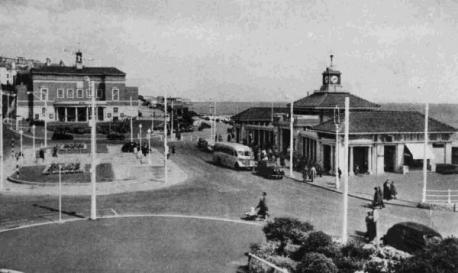
pierapproach1950 Bournemouth

Fateful Choices: Part Two

Inspector Alexander Collier Mysteries will often provide a choice for the reader. If you want to obtain a deeper understanding or a ‘feel’ for the period follow the embedded links (high-lighted blue and underlined) found in the text of the story.

The Prediction
A Short Story of Fiction by B. B. Wright


Anger and disappointment blinded Joseph to the tranquil beauty of the parkland and public gardens alongside the Bourne River. It was 8:15 and he needed a drink but the few pence he had in his pocket were barely enough to buy him cigarettes. Seeing a bench ahead, he picked up his pace. When he was opposite the bench, he stopped, sat down and pulled out the packet containing his last two cigarettes from his shirt pocket. With a well rehearsed jerk of the hand, he popped up one of the cigarettes and placed it between his lips and lit up. He drew the smoke in deeply and exhaled donut swirls into the gentle evening breeze before he placed the last cigarette into his shirt pocket. Tossing the empty packet into the bushes, he hunched over, forearms across his knees, and pondered that evening’s misfortunes between the bursts of welcomed nicotine in his bloodstream.

He had only wanted ‘Queenie’ to tell him his future but from the moment she had laid down the tarot cards her demeanor changed; she became withdrawn—trance-like—and solemn and abruptly ended their session.

He had tried to elicit from her the vision she had seen but the commotion outside their door had taken precedence. The towering and booming voice of Arthur Brodley, a person for whom Joseph had worked for on several occasions over many year doing odd jobs, was mixed in heated discussion with ‘Queenie’s’ husband, Lawrence.

But, as quickly as the ruckus in the hall had arisen it just as quickly dissipated  and its tempo dropped to a whisper. Their receding footsteps along the hallway, the unlocking and locking of a door returned silence to the Stoddard household.

‘Queenie’ stood at the open door to the room that they had shared and had insisted that he leave immediately and he had promptly complied.

She’s no focken goude, he thought. I coulda had me a drink if I hadna gone and seen her. She’s just plain no focken goude.

He looked at the cigarette between his fingers that was about to burn him and used it to light up his last smoke before grinding the butt out with his boot.

“Hmm…Brodley,” he mumbled.

Joseph was not a man to believe in coincidence especially when he was in ‘Queenie’s’ company and whatever part of his future lay in those unread cards he was convinced the answer somehow resided with Brodley. Emboldened by the thought, he decided to drop by Brodley’s house by weekend’s end.

He glanced at his watch.

The Friday night crowd at the pub should be just about ripe by now, he thought, for me to nick a snort or two.

On Saturday morning, a frazzled and clearly upset Mary Elizabeth ‘Queenie’ Stoddard appeared at the police station. Sergeant Billie Snowden who was manning the desk rolled his eyes the moment she came through the door. His shift had just started at 9 o’clock and her untimely appearance interfered with his ritual of a tea and scone and a read of the Saturday Echo.

“Good mornin’, Mrs Stoddard. What brings ya out so early on tis beautiful mornin’?” He asked as he spread the clotted crème from a small butter cup beside him on one half of the scone.

“It’s a matter of life and death.”

Scooping a dollop of strawberry preserve from its jar with his teaspoon, he placed it on his half of scone. “What’s ‘a matter of life and death?’”

“Is the Chief Inspector here?”

“No he isn’t, Mrs Stoddard. He’s not expected for at least another hour. Maybe I can…”

“Help? No,” she interjected, “I’ll wait right here for the Inspector.” And she sat on the bench against the wall opposite Snowden and crossed her arms and stared at him.

As it turned out, her wait was almost two hours.

Chief Inspector Alexander Collier, a lean, broad shouldered man of average height, had barely stepped through the door when a surreptitious nod from Sergeant Snowden directed his attention to Mrs Stoddard. Without breaking his step, he pretended not to notice her and continued down the hall. Opening the door to his office, he turned to close it and was met by Mary Elizabeth looking up at him.

“Mrs Stoddard…how stealthy of you. You must have been on me heels all the way and I hadn’t even noticed it.”

She poked at the pipe in his jacket pocket. “You know smoking isn’t good for your health, Chief Inspector. And nor is lying.”

“Hmm…Here, sit down,’ he said with a smile and directed her to one of two chairs in front of his desk. “Can I get you a tea?”

“I’d love one. At least you’re better than that big oaf out there who offered me nothing.”

“I’ll talk to the Sergeant so it won’t happen again.”

He walked to the tea trolley behind his desk and checked to ensure that the kettle had enough water in it before he plugged it in. His tea cup and saucer were on his desk from the day before. “Well there! That won’t be long.” Clearing off the crumbled napkin and crumbs from his desk and returning his tea cup and saucer to the trolley, he shuffled a few papers and folders to one side before sitting down. “Now, Mrs Stoddard, what can I do for you?”

“As you have heard, I can see into the future.”

“I’ve heard,” he replied matter of factly.

She ignored the tone in his reply. “In some cases I cannot measure time. I can just see ahead. I am a telephone myself—to use a simple expression. It allows me to predict the future.”

“Telephone?! Ah…yes…a connection to the spiritual world. Still…you’ve been convicted three times for fortune-telling.”

“I am an honest spiritualist. I am not a swindler!”

“The law thinks otherwise.”

The high pitch whistle from the kettle interrupted their conversation. Swiveling his chair around, he poured the boiled water into the teapot, swirled it around and placed its lid back on before he returned to face her. “We’ll let it steep for a few minutes.” He reached for his pipe but thought better of it remembering her comment earlier. “Mrs Stoddard…why are you here?”

“To report a murder.”

“A murder!”

“Yes. Arthur Brodley’s murder.”

“Arth…Maybe you should have some tea now, Mrs Stoddard.”

He prepared her tea to her liking with two sugar and one cream and handed it to her then sat back in his chair to listen.

She took a sip and sat in silence for several moments before continuing. “It hasn’t happened yet.”

“I know it hasn’t. I saw him not more than a half hour ago.” He gave her a long hard stare. “Mrs Stoddard…I really have a busy day ahead of me.”

Tightly clutching her purse on her lap, she replied: “You don’t believe me, then?”

“I don’t believe in your psychic powers, Mrs Stoddard. I’m pleased you haven’t crossed the law here in Bournemouth but to me what you have just said is no more than voodoo, hokum, psychic trash. I can’t act on the whim of a…”

“Spiritualist?” she interrupted. She placed her cup and saucer on his desk. “Then, its best I take my leave since I can see it would be a waste of my time trying to convince you. No need to stand.”

As she opened the office door to leave she stopped and turned back to him.

“Is he a friend, Chief Inspector?” she asked.

“Arthur Brodley? I guess in a way. Yes.”

“Then I would find a way to protect your friend before it’s too late.”

Leaving the office, she quietly closed the door behind her.

For a brief moment, he stared at the closed door, tapping his fingers on his desk, before he returned her cup and saucer to the trolley behind him. Swiveling his chair snugly back into position behind his desk, he let out a long sigh and pushed the button on the intercom and called Sergeant Snowden in to review the day’s roster..

Fateful Choices: Part One of a murder with a twist by B. B. Wright

Bournemouth East Cliff from Pier

Fateful Choices: Part One

Inspector Alexander Collier Mysteries will often provide a choice for the reader. If you want to obtain a deeper understanding or a ‘feel’ for the period follow the embedded links (high-lighted blue and underlined) found in the text of the story.

A Short-Story of Fiction by B. B. Wright


The English south coastal resort of Bournemouth in 1939 had a population of 130,000. The natural beauty of its cliffs and the wide sweep of its bay embraced a magic carpet of sand while the Bourne stream—fringed with parkland and public gardens—stretched into the heart of the coastal community. Bournemouth’s outstanding characteristic and attraction was its breadth of view and openness.

Perhaps that’s why psychic, medium, spiritualist, mental healer, psycho-analyst, folklorist, Mary Elizabeth Stoddard (a.k.a. ‘Queenie’) and her husband, Lawrence Stoddard who was said to be a ‘powerful deep-trance medium,’ arrived there in 1934 to set up residence. But, then again, maybe that wasn’t the only reason they moved from Gloucester to this tourist location. Within the first six months of setting up shop, so-to-speak, their business had surpassed their wildest expectations.

In April 1939 the local pub was abuzz with the mysterious fire and capsizing of the S.S. Paris (the largest liner under the French flag at that time) and the expected war with Hitler’s Germany.

The bartender, Jock Mahoney, reached under the bar and slapped March’s Bournemouth Echo with the banner headline face up on the bar’s surface and pointed his pudgy finger at it: Spiritualist Prophesies Sinking Of S. S. Paris. “Last month’s paper boys! Read and weep! Told you blokes she’s the real deal. Kept this to rub your faces in it.”

“Nothing more than a lucky guess Jock,” chortled Quentin Hogg from the far end of the bar.

“Then how she’d know it was goin’ to be a fire that sunk the Paris in the port of Le Havre? Tell me that ‘Hogg-face?’” retorted Mahoney. “And, unless the rest of you soused heads missed the obvious, how she’d know it would be the Paris?”

Joseph Phillip Morris, who was often called ‘Philly’ by pub regulars, had just purloined a whiskey chaser to accompany his pint of ale from the inebriated person beside him when he leaned in to the conversation: “Maybe tha’ focken bitch,” he hiccuped, “is a spy for tha’ Hitler fella.”

The conversation stopped dead as everyone turned to look at him.

“Hey, Philly?!” Quentin Hogg called out.

Joseph took a draw from his cigarette and purged the smoke through his nostrils before he straightened to a wavering position to focus his attention at the far end of the bar. “Wha’ canna I do fa’ ya Hogg?” Unsteadily, he used the cigarette in his mouth to light up another. For a moment he stared at his deeply stained nicotine fingers holding the used cigarette until Mahoney slid an ashtray under his nose and he quickly butted the cigarette out before it burnt him.

To most of the people there, Joseph ‘Philly’ Morris was a loser. The clientele of this pub he frequented had come to know that and, as a result, could barely tolerate him. A chain smoker and alcoholic, he had an ego bigger than he should ever have dared to have.

With a Cheshire cat-like smile, Quentin winked mischievously at those who could see him at the bar and nudged the person beside him with his elbow. “What’s that secret formula you use… you know… the one for picking football winners?”

A quiet chuckle rippled among the patrons listening in.

“What’s that got to do with the sinking of the Paris?” bellowed Mahoney, perturbed by Quentin’s hijacking of the conversation.

“Be patient, Jock. Don’t get your knickers in a twist. There’s a point or two to be made here. When done, I expect a round for everyone from you except for that scoundrel at the other end of the bar.”

Regularly, Joseph had been tolerantly allowed to interject his slurred wisps of ‘erudite wisdom’ about the home team to this well-informed and loyal pool of men of the Bournemouth and Boscombe Athletic Football Club but, at the moment, he silently sat in a drunken stupor shrouded in cigarette smoke trying to figure out which man on either side of him was the scoundrel that Quentin referred to.

“Philly?! “

“Huh?” Joseph blinked a few times before Quentin came into view.

“Isn’t your secret formula ‘Queenie?’” asked Quentin.

“How da know tha’?…She’s no focken goude! “

Everyone’s eyes were now fixed on Mahoney, who slowly slid the newspaper from the top of the bar to the shelf beneath.

“Now tell me somethin’ else, Joey. Who’d ya bet on when the home team played in March?”

Joseph drew in the smoke and blew it out as he looked up at the ceiling. “Tha’ be March you said?…Hmm…Notts Co. Stupid woman…she got it wrong again.”

The two men sitting beside him slipped off their stools and moved further down the bar.

“Well, what doya think there, Jock? Have I made my points? A free pint for everyone?”

Reluctantly, the burly figure of Jock Mahoney nodded and began to service the rush to the bar.

It had not mattered that the home team had won in March because Joseph had committed the unforgivable act of betting against the home team. For all present, his revelation was particularly heinous because the game was against their arch-rival, Notts Co.

By the middle of May, Joseph had been shunned by even among the slightest of few who might have given him a pardon. The week of May 15th had been an unusually difficult time for him to find odd jobs and by the Friday of that week he had already paid out his last shilling for cigarettes and beer.

Joseph’s wiry and unkempt figure sat alone in an uncontested far corner booth of the pub. Several empty mugs cluttered his table as he slung over his last pint of frothy dark ale. Lifting his mug he toasted his imaginary companion opposite him and took a large swallow. Licking off his beer mustache, he lit up another cigarette and drew in deeply before exhaling. “You know…I’ve got me a new strategy.” He removed a piece of tobacco from the end of his tongue and took another swig of beer. “Strategy for wha’ you ask?” Why for picking football winners! Wha’ else? Not a sausage! ‘Queenie’s’ no focken good! Here’s my secret.” Sliding his half pint to one side, he bent forward and whispered his strategy to his imaginary companion.

For the first time, Joseph was just sober enough to appreciate that his alcoholic haze had made him feel untouchable by the sneering glances of the men around him. Yet, the truths those men carried about him stung deeply and had already left its imperviously permanent mark that could not be ignored. Success! That’s all he wanted to feel! To no longer feel the failure that had dogged him most of his life!

He sat back and looked at the remnants of beer in his mug and made a decision. He didn’t care that Friday would be outside his usual routine to see her. He didn’t care that she was “no focken good.” He had made up his mind to see ‘Queenie’ that evening.

Perhaps, he thought, she would get it right this time.

At 7:00 that evening, Arthur Brodley placed the Bournemouth Echo he was reading on the table beside him and got up from his armchair to get ready for his eight o’clock appointment.

He was a stout man with thinning hair and a thick, white mustache. His appearance belied a man much older than his sixty-four years. A widower, he had attended a séance every Friday evening at 8:00 o’clock at the Stoddard residence since Mary Elizabeth (a.k.a. ‘Queenie’) and her husband, Lawrence, arrived in Bournemouth five years ago.

Though Arthur Brodley had paid a hefty price on each occasion for the Stoddards’ services, he was convinced that it had been money well spent because it provided precious time with the spirit of his late wife, Nancy.


An Unexpected Gift: Part One of Two

white picket fence oneAn Unexpected Gift
A Short Story by B. B. Wright

November’s rain and bone chilling dampness blanketed the Town of Milsburg in the Region of Grey-Bruce. For many inhabitants of this Region which was located two hours north of Toronto on the fresh waters of Georgian Bay, the Grey part of the Region’s name had taken on a life all of its own. Grey days outnumbered sunny days twenty to one and sunny days fell into that apocryphal meteorological category of overcast with some sunny periods. That is, sunny periods seen in the blink of an eye that heavily depended on whose blink you were talking about.

Cozy in her blue, soft brushed polyester pajamas, bought for her by her late husband, Tom, Sylvia Canfield snuggled down in bed and, turning onto her side in a fetal position, she pulled the comforter tightly up around her and chided herself for not programming the thermostat to come on earlier.

Beside her, Pepper, her black terripoo dog, stood up, shook himself out, turned around a couple times before flopping down with a hard thud against her back.

Once assured that Pepper had settled into his cozy spot, Sylvia closed her eyes and began to slowly drift off to sleep.

On the edge of REM sleep, she was jolted awake by Pepper who had become annoyingly restless.

Plying his doggie thing of standing up, turning around and slamming up against her with increased frequency, Sylvia turned intending to throw him off her bed when Pepper jumped off and ran to the bedroom door and began to scratch frantically at it.

“Ugh! Okay! Okay, Pepper! I’m getting up,” she said, disgruntled by the thought of leaving her warm bed.

She pushed her thick blonde hair back from her face and swung her legs over the side of the bed.

In her mind, the intent and urgency of Pepper’s plea left no doubt that time was of the essence.

But, by the time her feet on her five foot-two frame hit the cold wooden floor searching for her Haflinger woolen slippers, Pepper had managed to nose the door open and was on his way downstairs.

“I don’t know where you think you’re going without me,” she grumbled as one hand searched for her slippers which had somehow got kicked under the bed while the other hand fumbled in the darkness for her dressing gown that should have been draped over the chair at the end of the bed but was found instead on the floor.

One sleeve of her dressing gown in place, she rushed through the open bedroom door while unsuccessfully attempting to snag the other sleeve. Switching on the hall light and gathering up her gown so not to trip, she bounded down the stairs to the kitchen after Pepper.

“A dog in need could be an accident indeed and this morning isn’t going to be one of them,” she murmured repeatedly, hoping her words would provide inspiration and reassurance.

Moments later, Sylvia let out a long satisfied sigh as she adjusted her robe in place and watched Pepper rooting about outside searching for the best place to do his business.

He seems so undeterred by this foul weather, she thought. And, she envied him for that.

Forcing her hands into the side-seamed pockets of her blue, full snap-front robe, her shoulders crunched inwards to a sudden chill.  A burst of warm air from the vent she stood beside traveled up her leg and she moved closer to it.

By the time her toast popped up in the toaster and the whistle on the kettle heralded, Pepper was back in the house shaking off the rain drops and looking for something to eat.

Savoring each morceau of generously spread homemade strawberry jam on her buttered toast, she leaned forward slightly at the kitchen table to watch Pepper eating from his chow bowl.

Though still tired and sleepy, Sylvia felt a sense of comfort and satisfaction as she watched him.

Putting down her slice of toast, she picked up her tea mug and blew across the tea’s surface and welcomed the warm, moist steam on her face and the heat from the cup cradled in her hands.

Her attention drifted to the kitchen window and the inclement weather and she hoped that Pepper wouldn’t pester her too much for his ritual walk.

In the background, the weather report from the radio assured its listening audience that the rain would stop late morning; the clouds would lift and sunshine was expected for most of the afternoon.

Winds off Georgian Bay could be biting this time of year but the promise of sunshine was the trump card that made her walk with Pepper that much more palatable and likely.

Unnoticed by her, Pepper had finished his meal, slurped down some water, and, leaving a trail of water droplets behind him from his soggy beard, made his way across the room to her and sat on the floor in front of her.

A single soft bark was all Pepper needed to get her attention.

“Good Pepper! You used your quiet voice just like we taught you.” And, she fed him a small piece of her toast to reward him. Placing her cup on the table, Sylvia adjusted her position on the chair and patted her lap to encourage him to jump up onto it.

Immediately, she regretted her invitation because his wet face, licking tongue, and affectionate energy were overpowering until she got him to settle down. Once she could comfortably pat him, she became more accepting of his occasional gestures of affection.

_____

Tom had first brought her to meet the litter of terripoo puppies during their third year of marriage.

It had been 3 months after her miscarriage.

Shortly after the miscarriage, an invisible curtain had fallen between them as she struggled against the depression that had seeped into her life. Laughter—a constant companion before the miscarriage—had become silent and foreign.

She often looked back on this period and wondered if she would have survived without Tom’s steady support.

On the day he took her to meet the puppies, intuitively she knew why he had taken her.

As the six puppies cavorted around her while she sat on the floor, she found it impossible to remain aloof from their unconditional loving natures; slowly she began to interact with them.

Mysteriously that day, laughter, that had been so unattainable and deeply buried within her, bubbled to the surface.

While playing with the puppies, she noticed for the first time that a black one had already carved out Tom’s attention.

Later, she learned that Tom had already named him Pepper.

Pepper, Tom’s first dog, had not only brought out the endearing little kid in Tom but Pepper that day, alongside his brothers and sisters, had helped to initiate her road to recovery and her reconnection to Tom.

Sylvia looked upon the next seven years as the happiest in her life. Though she had learned that she would be unable to have children, somehow it no longer mattered as her life had become filled to overflowing with travel, teaching, writing her first novel and being with Tom. She and Tom had even discussed adoption.

Then, last summer arrived and with it Tom’s diagnosis.

When Tom was dying of cancer neither she nor Pepper left his side.

Pepper, normally a quiet dog except when strangers came onto the property, had become unusually restless during Tom’s final hours.

When Tom finally died, Pepper’s prolonged forlorn howling sent a soul-chilling dagger through the night.

_____

Sylvia’s eyes bubbled up with tears as she recalled that night two months ago and she cradled Pepper closer and buried her face into the soft, downy fur on his head.

She knew it was just her imagination but, for a brief moment, she could have sworn that she had felt Tom’s presence. And, she held Pepper even closer.

As the morning dragged on, the rain finally stopped as it had been forecast and the sky cleared up.

Placing Pepper on the floor she said: “Well little friend, if we’re going for a walk I’d better wash up and put on warmer clothes.”

Pepper playfully zigzagged in and out around Sylvia, occasionally leaping up at her, while she pretended to try and catch him. This continued for several minutes until he bounded up the stairs barking and headed in the direction of her bedroom.

Two hours later, Sylvia was glad she wore her ankle-length black Spanish Merino coat as she walked along the pebbly beach at Macleod Park, roughly ten minutes from where she lived. The sunshine had brought a handful of people to the park but most, she surmised, were discouraged by the cold north wind blowing off Georgian Bay.

She pulled the long hair Tuscany collar, that doubled as a hood, over her head and watched Pepper running ahead, sniffing this and that as he went along.

Normally, she would have had Pepper on a leash but, with so few people in the park today, she thought it would be safe to let him run free.

Pepper rarely ran too far ahead. Often, he would scurry back with some prize or other he had retrieved and laid it at her feet. Occasionally, Sylvia would gather up his newly found toy and play fetch and retrieve but more often than not, she deflected his attention elsewhere while she discarded it.

She was glad that she had decided to wear her woolen mittens as the cold wind nipped at her cheeks.

Picking up a flat stone from the beach she tried to skip it in the rough water but was unsuccessful. Undeterred, she tried several more times until one stone completed a triple skip.

And, she giggled like a young girl.

Looking around for Pepper, she found him further along the shoreline than usual and, with his nose planted so close to the ground she surmised he was following the scent of something.

_____

The Town of Milsburg began to change about ten years ago. Whether it had changed for better or worse was open to debate. The local bakery coexisted with Tim Horton’s—contrary to expectations—and the tax base was given a sizable boast from the influx of people from the Greater Toronto Area hungry for land on which to build their dream home. Those who came had come for a chance of respite and an opportunity to play in at least one of the four seasons. This would have been all fine and dandy if the outsiders had been willing to leave well enough alone. But, when the smell of money to be had reeked across the landscape, the tenor of country living—though kicking and screaming—was corralled in and redesigned to give a contrastingly new meaning to what was meant by country living.

Country living had become defined along narrower lines that emphasized the self-centered blindness of entitlement. This philosophical shift irked the locals to their very core as they felt these city dwellers had bullied their way into their life-scape.

Real-estate that had once been enjoyed by all—especially along the shoreline—became prime real-estate gobbled up overnight, only to be traded for a hefty price-tag when the time was ripe.

Three new high-rise condominiums had been completed along the shore-line last spring so that there were now five: two at one end of Macleod Park and three at the other.

The number of upscale shops along Sykes Street which ran parallel to Macleod Park had tripled. These shops mainly catered to seasonal dwellers and tourists; while the locals stayed with the familiar to support their friends, their family and their way of life.

Begrudgingly, the locals slowly came around to tolerate these unwelcome changes and to accept them as part of life’s natural flow which included  the unfortunate  disappearance of familiar faces and the arrival of strangers in their place.

At the corner of Sykes and Lombard was a century old Tudor-style building, the Boar Inn and Pub where the  locals—mainly the fifty plus group—came for a few pints, a game of darts, a good chin-wag and sing-along, and plain good food, usually British fare. The younger group on Friday and Saturday nights wouldn’t be caught dead there and willingly drove the forty minutes along the coast to the joie de vivre atmosphere of the Town of Collingwood to celebrate the weekend at the Admiral’s Post Pub, Lounge 26 and the Copper Blues.

Gregarious people, Sylvia and Tom were easily assimilated into this community and had become staunch contributors to the community’s cohesiveness.

Though Sylvia and Tom had come from the city, they were part of the melt of local citizenry who looked upon the urban influx as nothing more than pesky insects that defined one of the four seasons

_____

Pepper was busily trying to pull some sort of object out from between two large boulders on the shoreline with the help of a man.

If Sylvia could have disappeared she would have that very moment. The man helping Pepper was none other than Thackeray Thomson, their family lawyer.

Tom and she had always been on good terms with Thackeray but she was embarrassed by not having returned his many phone calls. His voice messages had been very clear and explicit: “…There is a pressing matter with respect to Tom’s Will. Please call as soon as you hear this.”

When Yesterday Becomes Tomorrow: Chapter Seven

index

When Yesterday Becomes Tomorrow is written by B. B. Wright

Ethan said nothing for a long time. His back pressed against the kitchen counter, he scrutinized the three of them at the table as he crossed one foot over the other. Where the fuck do I begin? He had no idea whether Jeffrey and John had anything to do with that bullet that came through the living-room window earlier; but, he knew he had to establish an answer to that one quickly. As for Louise… well… he knew she knew more than she was letting on. The question was: “How the hell to get it out of her.” Working for two masters is a BITCH! He lamented. He bit his upper lip and let loose a long sigh. How close should I play my cards? Since he and Tom took on this assignment, he had gone from trusting some to trusting none. And now, he was looking at two people-Jeffrey and Louise-who use to be among the some. Too long in the fuckin’ sewers of this world, he thought.

“Ethan?” Jeffrey asked, a smile taking shape from the corner of his mouth. “Do you mind?” He nodded toward the entrance to the dining room. “Maybe I might come up with something,” he suggested with a slight shrug. Receiving only a cold stare and no answer he continued. “I knew Tom was working undercover. It wasn’t until about 6 months ago though that I learned he had also been working for CSIS.”

CSIS is the acronym for Canadian Security Intelligence Service. It was created by an Act of Parliament on June 21, 1984. Its headquarters is located in Ottawa, Ontario. CSIS works closely with the intelligence agencies of the United Kingdom, Australia and the United States. Though initially its emphasis was combating the activities of foreign intelligence agencies operating in Canada, it has broadened under the CSIS Act to include the worldwide collection of security intelligence related to threats to the security of Canada.

“Tom?” interjected Louise.

His head tilting slightly downwards, Jeffrey turned to Louise, took in a deep breath and nodded. “It was a big surprise to me too,” he replied softly.

“But…how would you even know that?” she retorted. “I sure didn’t! And, if there was anyone who should have known it would have been me. We never kept secrets from each other. NEVER!” She folded her arms tightly across her chest and looked away.

Biting on his upper lip, Jeffrey watched Ethan’s reaction to this exchange between Louise and him from the corner of his eye. “Louise, how do I answer you?  I…I thought you knew.”

“Hang on there for a moment, Jeffrey,” Ethan interjected, pointing the Glock at him. “How did you find out about his CSIS connection? Only a select few including me knew that. It was a closed group and I don’t recollect your name being on that list.”

“You forget that he reported directly to me,” Jeffrey retorted, thrusting out his lower jaw.

“But, only on matters that related to law enforcement. Not national security! So, again, I ask: “How did you find out about his CSIS connection?””

Louise’s jaw dropped. “National security? My Tom? Ethan…what are you talking about?”

Ethan ignored her query and kept his eyes fixed on Jeffrey.”Well?”

Looking at Louise and then John, Jeffrey shifted forward in his chair, folding his hands together on the table “Let me dig out that bullet in the wall first. If my hunch is right, that bullet should have a lot to tell us.” Seeing Ethan’s askance look he felt compelled to say more but decided to hold off and just wait for his reply.

Ethan rolled his tongue around the inside of the front of his mouth as he thought about Jeffrey’s request. “You and John must have brought cuffs with you. Right?” Jeffrey nodded. “Cuff them to the chair and slide both sets of keys across the table.” Once they were cuffed and he had the keys, he shifted to a better location to keep an eye on all three. “Now, you can go ahead and dig out that bullet.”

A few minutes later, Jeffrey was rolling the bullet back and forth in his palm. “Hmm!” he repeated several times as he continued to examine it. “Notice anything unusual about it, Ethan?” he asked, holding it up for him to see.

“You’ve got to be kidding? I’m suppose to see something from this distance?”

A wide grin formed on Jeffrey’s face: “Aren’t you CSIS boys the crème de la crème, the exceptional of the exceptional, the…”

“I get it smartass! No need to continue. Let’s have a look.”

Jeffrey dropped the bullet into Ethan’s hand and returned to his seat and sat down, stretching out his legs and crossing his arms.

For a few minutes Ethan said nothing as he scrutinized the bullet. “Well it’s definitely a 9 millimeter.

“And, what else do you notice?” Jeffrey asked.

“It’s both longer and heavier than I expected.”

“And?”

Ethan rolled the bullet between his thumb and forefinger as he looked at it more closely. “Well, I’ll be damned! It has a hardened steel penetrator as its core.” Jeffrey nodded his agreement. “Did either you or John hear the shot?” Seeing a blank stare from both Jeffrey and John he knew the answer was no. “Then they used a silencer.”

Jeffrey straightened up in his chair. “Whoever it was meant business. That bullet was designed to pierce military issue body armor.”

Ethan slid the keys to the cuffs across the table to Jeffrey. “Would you and John be up to checking if the sonofabitch who shot this left behind a cartridge.”

Jeffrey looked across to John as he un-cuffed Louise. “No, I don’t think that will be a problem. Do you have any idea within what perimeter we should scour?”

“Considering the weight of this bullet, I’d say no more than a 400 meters radius. When the trajectory is factored in, it will narrow it down to only a few locations. By the way, you still haven’t answered my question.”

“What question?” Jeffrey replied, over his back as he un-cuffed John.

“About how you knew that Tom had been working for CSIS?”

Jeffrey slowly turned to face Ethan. “Why don’t we leave that for later? Eh? Let’s find that cartridge. It may tell us about what kind’a weapon was used. Unless…Huh!…Unless you already know?”

“A Vinovka Snaiperskaja Spetsialnaya,” Ethan replied.

“Russian?” Louise interjected.

Ethan nodded: “VSS Sniper Rifle.”

“But how would you know that?” asked Jeffrey.

“I don’t. It’s just a guess. You know one of those playing the odds sort’a thing.” Ethan held off Jeffrey’s next question. “You’ll understand later. In the meantime, let’s try to find that cartridge.”

“If that’s the way it’s gotta be then that’s the way it’s gotta be. Later it is. Still…” Ethan’s cold stare stopped him dead and he decided to redirect his attention. Rubbing his hands together, he looked around the kitchen. “Is there any coffee? I could sure do with a cup right now. It looks like we’ve got a long night ahead of us.”

“I’ll make a fresh pot,” Louise piped in. She turned to Ethan with a scowling look. “I think you can put away that gun, don’t you think? And, once you’ve done that put the leftovers from supper in the oven to warm up while I get a coupla flashlights.” She saw Jeffrey eyeing the wine rack. “Are you sure you don’t want something stronger, Jeffrey?”

“Maybe once we find that cartridge. You know… to celebrate,” he chortled, winking at them and shaking his head. “In the meantime, your flashlights along with mine plus coffee to go should do the trick.”

Flock or Not: That’s What It’s All About

Flock or Not: That’s What It’s All About

A Poem

by B. B. Wright


A group of sheep is a herd or flock;

the shepherd is never a flocker.

A volery of birds is a fleet or flight

also a pod, congregation or parcel.

While small birds’ in groups

a dissimulation is called,

a mouthful to remember indeed!

Though these words are few,

soon you’ll learn new,

to describe a flock, congregation or parcel.

A gaggle of geese look up from the ground;

while in flight a skein, a wedge of their kind take notice

of Albatross—feathered giants indeed—

in flock or rookery combined.

“Spectacular!” the geese exclaimed,

in confidence of the sighting just seen.

Until the screech from the ground

where a party of jays

made the whole thing turn upside down.

“What do jays know?” was the harsh, self-assured, raucous reply

from the murder of crows nearby.

“There’s no mystery in this!”

screeched their unison entreat,

“It just simply is.”

A committee of vultures circled the gathering

waiting for the ripe time to come down.

“Look!” alerted the fall of woodcock:

“a wake, a kettle ‘uptown.’

An exaltation of larks

drowned out the woodcocks;

while an unkindness of ravens

on their way to the barn

scared a gulp of swallows in turn.

Grouped in charms, chattering, drums or troubling

—whatever their group is called—

humming wings and twittering squeak,

the hummingbirds’ nectar reply

was to counsel the geese

and give the jays peace

the hardest wisdom to buy.

In the front of the court

a murmuration of starlings and a host of sparrows patiently sit looking on;

while a pitying of turtledoves and a rafter of turkey hope the trial will not last long.

When the learned parliament of owls finally arrived,

with white gowns all newly preened;

before they could “hoo”

a prorogue was ensued

from the charm of warbling finch.

When the bouquet of pheasant nodded support

— simply not expecting a hitch—

that’s when the ostentation of peacock

yelled “Foul play!” and called it “A BITCH!”

But,

when the owls consorted

with a sord of mallards

the tidings of magpies flew away.

Debate and rebuttal and erudite rubble

crumbled the mumble astray;

until egos did stumble

and they did fumble

apparently lost in melee.

An answer came out

—expedient no doubt—

and here’s what they had to say:

“Agreement lies far to the south…there’s simply no other way.”

Askance looks

—filled with doubts—

their dilemma chirped underway.

“Hoo, hoo-hoo, HOOH should go,

mallard or owl this day?”

“That answer is easy,”

quacked the team of ducks,

bunched up with their newly born.

A hush, like hoar-frost,

suddenly settled over

the cacophonous pod that day.

“Hmm!” said the chief owl, glaring down his nose

at the paddling of duck on the pond.

“Hoo-hoo can a bunch of ducks like you

and your brood of duckling know?”

His oppressive eyes and threatening ways

gave the ducks a stuttering blow.

Until,

a dole of doves

settled in

to defiantly stand in a row.

“Hoo, hoo-hoo, HOOH!  Okay!” the chief owl yawned,

“If you must. Let’s hear what you have to say.”

A young duckling stepped forth

to firmly take hold

her bold intention precise:

“Your answer is clear! Stay here!” she exclaimed,

stamping her web-foot twice.

“But…” stumbled the owl,

trying to recover

from someone as outspoken as she:

“the… Kingdom of Penguins…

with their waddle on land and their raft in water

have wisdom greatly revered.”

“I don’t give a damn!” the duckling exclaimed

“Look around you silly old owl!”

With a paradoxical look the parliament shook,

and clearly shrugged an answer in vain;

while moans and groans as if in pain

mixed with the congregations’ disdain.

The duckling strode forth

and with her mother’s support

the duckling took center stage.

“Wait!” she cried out,

with a surprising rapport,

for someone as young as she.

With the tip of her wing, she took them all in

especially the parliament to her lee.

“The paradigm shift

is real easy to see

if only you would all listen, please.”

When the siege of herons called out their support,

the volery of birds settled down.

“Here’s my question to you,” she slowly began,

earnestly looking around.

A slight murmur arose

among all the rows

until silence reposed profound.

“How many agree ,”

she preceded her challenge,

“raise a wing if you concur,

that a flock or rockery

of Albatross in flight

is a spectacular sight to see?”

Opinions and thoughts never really sought,

the pods hesitated ever so slight.

A glance to the left,

A glance to the right,

the center led the flight.

All wings raised

—except the jays—

for what they knew was right.

The chief owl humbled,

but still shrewdly insightful,

did not let his goals go astray.

“Answers all, lie within?” He thought,

this scrupulous circumspection could  pay.

His trap now laid

the duckling displayed,

scooped up so the flock could see.

His position without doubt

would now have real clout

sea to sea to sea.

Then laughter broke out

his parliament backed out

screeching pee-hoo-hoo

pee-hoo, pee-hoo at he.

When the chief owl looked down,

it was with a frown,

his white gown was all brown

below where the duckling had peed.

His plans now a shamble

by his selfish gamble

revealed by an innocent duckling like she.

When the duckling got down

she stood her ground

and the pod drew near to hear.

“Our rights are our might

—never surrender—

to someone the likes of he.

Though choices may be slender

your vote must be rendered

to ensure your destiny.”

When Yesterday Becomes Tomorrow: Chapter Six

holding GlockWhen Yesterday Becomes Tomorrow

by

B. B. Wright

“Whoa!”  Jeffrey Deaver’s outstretched arm stopped the forward motion of his companion in his tracks. For a moment, the two of them stood frozen in the door frame facing down at Ethan’s Glock pointing up at them from under the kitchen table. “Ethan?” Getting no reply, only a cold stare from him, Jeffrey let his revolver dangle from his forefinger. “I’m going to put my revolver on the floor and kick it over to you.” Turning to his companion he said: “You do the same, John.” The two revolvers slid across the floor, stopping a few inches short from where Ethan continued to keep his gun trained on them.

“Both of you take two steps in. Jeff, you turn to the right and you there, directing John with the tilt of his Glock, to the left. Now face the wall and take the position.” Arms outstretched, Jeffrey and John leaned into the wall in front of them and spread their legs apart.

Louise gave a slight tug at Ethan’s arm lying across her. “Ethan. The captain’s here to protect me.”

The bridge of Ethan’s nose pinched together as he glanced over at her. “Protect you? Protect you from what?”

“From you asshole!” bellowed Jeffrey. “Who else?”

“From me?!”  He turned and glared at Louise. “Do you know what the hell he’s talking about?”  Getting no answer, he nodded for her to follow him as he slipped out from under the table and stood up. When she was standing beside him, he turned and faced her. “Well? What in heaven’s name is he talking about?”

Louise pursed her lips and looked down at the floor. “Ethan…I…”

Ethan rolled his tongue around the inside of his mouth before pushing it against the inside and bulging out his lower lip. He looked over at Jeffrey and the other man. Biting on his lower lip, he let out a long sigh before turning his attention back to Louise.

“Look. Ethan. This position is getting kinda uncomfortable,” complained Jeffrey. “Do you mind?”

“Yes, I do mind! So, stay put!” Ethan stepped away from Louise to scrutinize the living-room through the opening to the dining-room from the kitchen side.  A spider web configuration around a hole in the upper corner of the large living-room window left no doubts in his mind that a bullet had entered through it. Maneuvering slightly to obtain a better view and not diverting his attention from the two men except for seconds at a time, his trained eyes followed the bullet’s trajectory from the window through the chandelier in the dining-room and into where the mirror had been on the back wall. He reflected on where he and Louise were standing when the shot rang out. He felt a cold chill travel up his spine as he looked at the now empty wall and then down at the shards of mirror on the floor. He murmured under his breath: “Jesu…the shooter saw me…my reflection … in that goddamn mirror.” He glanced over at Louise. “They were shooting at me. They had to be.”

“Ethan? What did you say? Are you alright?”  Louise asked, somewhat flummoxed by his appearance.

“Nothing important…I said nothing important. Here.” He said holding out his gun. “I hope Tom taught you how to handle one of these?”  Acknowledging that he had with a smile and nod, she took it. “Good!  Now, shoot the sonofabitch who so much as twitches.” And, he walked over to Jeffrey and began to pat him down. “You know Jeff, I think that bullet was meant for me. So, obviously there’s some kinda flaw in your reasoning, don’t you think?” Finished, he quickly moved across to John and repeated the process.

“What makes you think it was meant for you?” Jeffrey growled as he watched Ethan pat down John. “Maybe you set it up to look that way.”

““Look that way”?” Ethan rolled his eyes. “Look you overstuffed retired fathead, all you have to do is follow the trajectory of the bullet. If I had been two steps that’a way it would have hit me square in the middle of my forehead. Whoever it was, thought it was me not my reflection.”

Slightly flustered, Jeffrey replied: “I’ve only got your word on that.”

“There was a time, Jeff, when my word carried weight with you.”

Jeffrey shrugged: “Times change.”

Louise interjected: “Jeff, I think he’s telling the truth.”

“Maybe…you’re right…still, I need to see it for myself.” He motioned to straighten up. “So do you mind, Ethan?”

“Huh?”

“Do you mind?” he asked again, emphasizing his intent with the wave of one of his hands.

“Yes I do mind!  So stay the fuck there!” Satisfied that John wasn’t carrying any concealed weapons, Ethan stepped back and shook his head in dismay. “It wasn’t me who burst in here with guns drawn, Jeffrey.  As far as I know it could have been you or your sidekick who laid down that shot.”

“Really? Now, come on. Do you really believe that?”

“Like you said, Jeff: “Times change.””

“It’s getting fucking difficult standing like this,” Jeffrey replied, not trying to conceal his frustration. “By now you must have established that John and I aren’t carrying. Huh? So what’d ya say?”

Ethan turned to retrieve his Glock from Louise but found it aimed at his head. “Aah, I think Louise will have to make that call.”

“Louise? What the hell are you talking about?” Jeffrey glanced back over his shoulder. “Oh!.” He began to change position when a bullet from her gun slammed into the wall centimeters above his head. “Fuck! Okay! I’ll hold it!”

“Ethan, get over beside Jeffrey! NOW!” she commanded.

Pepper rounded the corner from the hallway barking and jumped up at Louise. The distraction was long enough for Ethan to twist the Glock from her grasp and regain command of the situation.

“Please sit there,” he directed her, pointing to the far end of the table as he backed up slightly.  “As for you two, stretch yourself out and join her. And, keep your hands flat on the table.”  Once the three of them were seated, he reached down and patted Pepper’s head. “Good boy! Louise? Where do you keep his treats?”

“In the pantry behind you, top shelf,” she replied.

Backing up he opened the cupboard with his free hand, found the box of treats and lifted it down and poured some into Pepper’s bowl. Ethan watched as Pepper gobbled it up. “By the way he ate it, it must be pretty good stuff.” Louise smiled back and nodded. He then looked at the three of them with a long, hard stare. “Well, I think it’s time to discuss what just happened and…why I’m here. Don’t you think?”